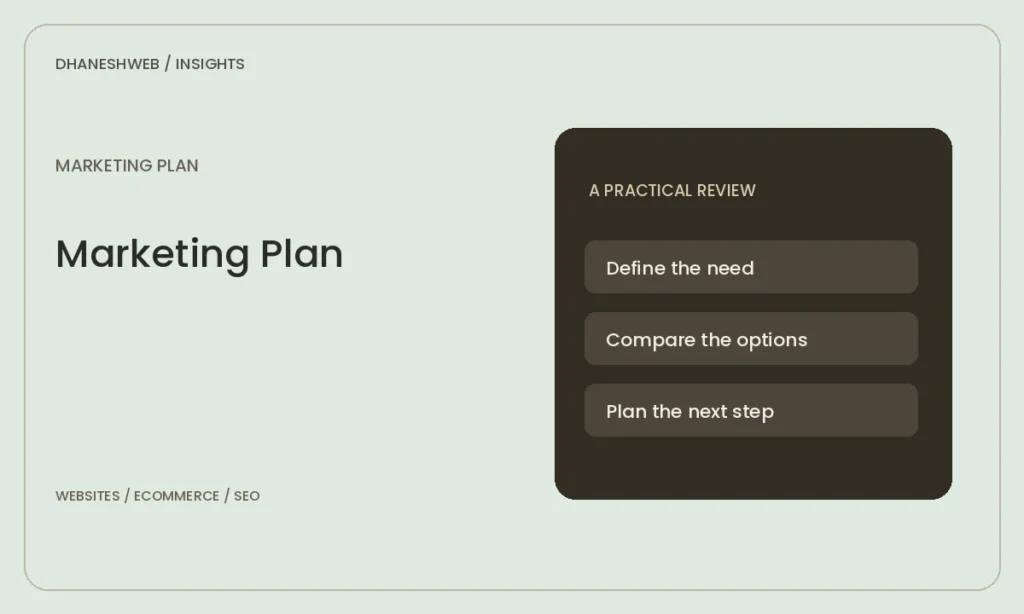
Connect the audience, offer, website journey and measurement before spreading effort across more channels.
Choose a business outcome
Start with a specific outcome such as suitable enquiries, repeat orders or attendance at a defined event. Identify the people the offer is for and the information they need before deciding to act. A general goal of more traffic is difficult to evaluate.
Record what the business can realistically deliver. Promotion should not create promises about stock, response times or service areas that the operations cannot support.
Make the destination useful
A campaign needs a page that matches its message. Explain the offer, provide accurate supporting information and make the next step clear. Test the contact or purchase route before sending visitors to it.
Review the experience on a phone, including load behaviour and form confirmation. A polished advertisement cannot repair an enquiry form that does not save or deliver the message.
Choose channels around the audience
Search content, local listings, email and paid promotion play different roles. Decide which channels can reach the relevant audience and who will maintain them. A small team may benefit from doing a few things consistently before expanding.
Use real business information and permission-based communication. Customer feedback and content should not be fabricated to make a channel appear established.
Create a review loop
Agree how suitable enquiries or orders will be measured and who will check the data. Keep an activity record so results can be considered alongside changes in pricing, demand and the website itself.
Set a review schedule and make one justified improvement at a time. Treat experiments as experiments, with assumptions and limitations, rather than promising a return before there is evidence.
Get help with your website
Explore our SEO Services service or discuss your requirements with DhaneshWeb.
Continue reading
- Local SEO for a Maharajganj business: a practical starting point
- A practical website checklist for businesses in Maharajganj