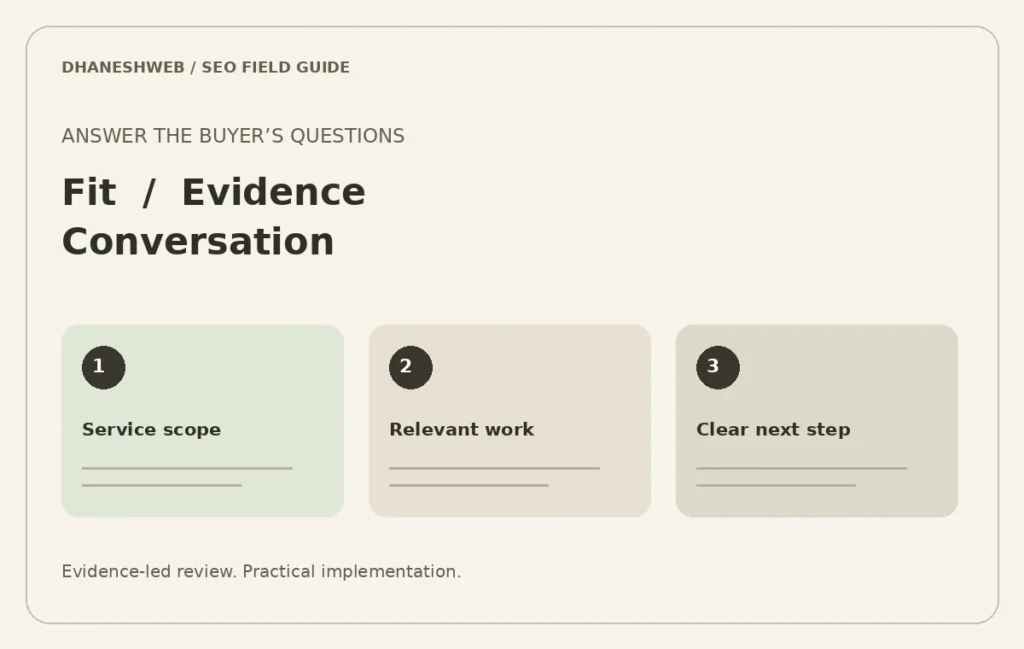
Build a service page around fit, scope, evidence and the next conversation instead of repeating broad keywords.
Define the buying task before drafting the page
A business buyer often needs to determine whether a provider understands a particular problem. Start with the service, buyer role and decision stage. Someone seeking implementation help needs different information from someone researching a concept. Write down the questions a useful first conversation would need to resolve, then decide which can be answered publicly.
Choose one primary service purpose for the page. Related capabilities can be linked without turning the page into a list of every service the business offers. If several pages target different audiences, explain the difference in their scope and examples. A different city name by itself does not create a different service brief.
Explain fit and exclusions early
Describe the circumstances in which the service helps, the information needed to begin and the work that may fall outside the proposal. This lets a visitor assess relevance before contacting you. Clear boundaries can improve the quality of a conversation even when they reduce unsuitable enquiries.
For example, a technical audit brief can distinguish diagnosis from implementation and ongoing monitoring. A website project can distinguish content preparation, design, development and hosting costs. State actual commercial terms only where they have been agreed by the business owner; do not invent universal timelines or payment splits for marketing copy.
Show the output a buyer can review
Replace vague promises with a description of tangible deliverables. Depending on the service, these might include a page inventory, an issue backlog, a design review, a tested template or editing guidance. Explain how an issue is verified and who is responsible for the next action.
An example deliverable can be described without pretending it was produced for a named client. Label hypothetical scenarios clearly and keep them separate from genuine case studies. A buyer should be able to distinguish the proposed method from work that has actually been delivered.
Use evidence with an honest contribution statement
Case studies are more useful when they explain the business context, the visible website experience and the provider’s exact contribution. Add the role only when it has been confirmed. Screenshots demonstrate presentation; they do not independently prove traffic growth, revenue or authorship of a software platform.
Client quotations need approval and attribution. When feedback is unavailable, use factual project descriptions and a direct live-site link rather than an invented endorsement. If an outcome is included, record the measurement period, source and relevant limitations. This makes evidence easier to assess and keeps the public page maintainable.
Make the contact step specific and accessible
Explain what a visitor should share: current URL, priority service, audience, required features and any known constraints. Keep the form focused on information needed for qualification. Check the route on mobile and test the actual receiving workflow before relying on it for enquiries.
If work is remote, say so directly. Working locations and service areas are different concepts. Describe calls, written reviews and handover arrangements without implying offices or in-person availability in cities where those have not been confirmed. Buyers can evaluate remote collaboration when the process is clear.
Connect the page to useful supporting content
Link a service page to relevant guides, project records and related implementation services. Use anchor text that tells the reader what they will find. An article can explain a detailed topic while the service page stays focused on fit, scope and the next step.
Review the page after real sales conversations. Questions that recur may reveal a missing explanation, an unclear boundary or a weak contact prompt. Use those observations alongside search data to choose the next edit. Publishing a large number of similar pages is less useful than resolving an important unanswered buying question.
Explore related SEO briefs
- Technical SEO Audit in Pune | Multi-service corporate websites
- Technical SEO Audit in Mumbai | Product catalogues and collection discovery
- Technical SEO Audit in Bangalore | JavaScript and B2B software websites
- Technical SEO Audit in Lucknow | Service-area and appointment enquiries
- Technical SEO Audit in Delhi | B2B lead generation and overlapping services
- Technical SEO Audit in Maharajganj | Small-business publishing and bilingual information
- Technical SEO Audit in Satara district | Manufacturing catalogues and distributor enquiries
- Technical SEO Audit in Prayagraj | Education content and seasonal publishing
- Technical SEO Audit in Chandigarh | Redesigns, migrations and URL continuity
- Shopify SEO Services | Collections, Products & Store Structure
- WordPress SEO Services | Indexing, Content & Technical Review
- Ecommerce Category SEO | Catalogue & Search Intent
Compare all location-specific audit briefs · Discuss your website priorities
Continue reading
- Search Console SEO Prioritisation: Build a Practical 90-Day Plan
- Shopify Collection SEO: Filters, Canonicals and Product Discovery
- WordPress Crawl and Indexing Audit: Diagnose Excluded Pages
Primary references
Use the official documentation alongside the examples in this guide. Platform behaviour and reporting interfaces can change.
- Google: helpful, reliable content
- Google: crawlable links and anchor text
- Google Search spam policies